


- Share
-

-


Alternator is co-financed by:
- Research Centre of the Slovenian Academy of Sciences and Arts (ZRC SAZU),
- National Institute of Biology (NIB),
- Jožef Stefan Institute (IJS),
- National Institute of Chemistry (KI),
- Educational Research Institute (PEI),
- Slovenian Institute of Hop Research and Brewing (IHPS),
- Geological Survey of Slovenia (GeoZS),
- Institute of Contemporary History (INZ),
- Slovenian National Building and Civil Engineering Institute (ZAG),
- Academic and Research Network of Slovenia (ARNES),
- Institute for Ethnic Studies (INV),
- Science and Research Centre Koper (ZRS Koper),
- Institute of Information Science (IZUM),
- Urban Planning Institute of the Republic of Slovenia (UIRS),
- Slovenian Research And Innovation Agency (ARIS),
- Institute for Economic Research (IER),
- Institute of Criminology at the Faculty of Law Ljubljana (INST-KRIM),
- University of Ljubljana (UL),
- Institute of Mathematics, Physics and Mechanics (IMFM),
- Rudolfovo – Science and Technology Centre Novo mesto (Rudolfovo),
- University of Nova Gorica (UNG).
Editorial Board
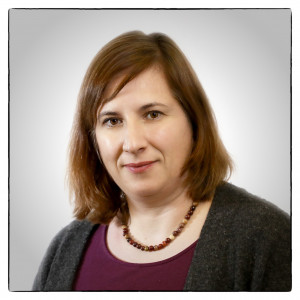
Sabina Autor
EditorShe obtained a PhD in philosophy from the Faculty of Arts, University of Ljubljana, and is a research associate at the Educational Research Institute. Her research focuses on social philosophy, questions of knowledge, and the role of education in contemporary society, as well as the education of children with a migrant background. She is also the initiator and co-editor of the Pedagogical Lexicon.
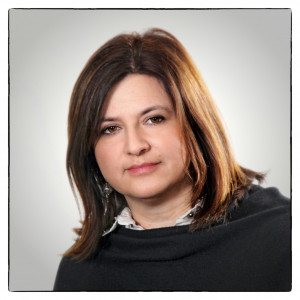
Helena Dobrovoljc
EditorIs a researcher and the head of the Department for Normative Guidelines at the Fran Ramovš Institute for Slovenian Language, ZRC SAZU. Professionally, she explores the theory of standard language, its norm and codification. Her research is primarily focused on the normative difficulties of various social groups. She is also a moderator at the Language Counselling Service. She is especially interested in linguistic peculiarities that, due to various social factors, deviate from the expectations, norms, system and nature of language. She holds a PhD in the Slovene Theory of Linguistic Naturalness.
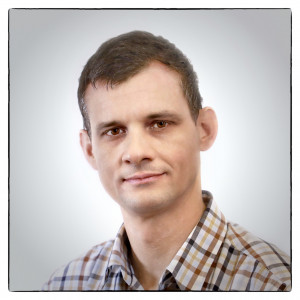
Anton Gradišek
EditorIs an Assistant Professor. He completed his PhD in physics at the Faculty of Mathematics and Physics at the University of Ljubljana in 2012. He spent the years from 2012 to 2013 as a researcher at the Korea Basic Science Institute in South Korea, and was a Fulbright Scholar at the Washington University in Saint Louis from 2014 to 2015. He currently works at the Jožef Stefan Institute in the Departments of Intelligent Systems and Solid State Physics. His interests include materials for the hydrogen economy, liquid crystals, applications of artificial intelligence in medicine, and bumblebees.
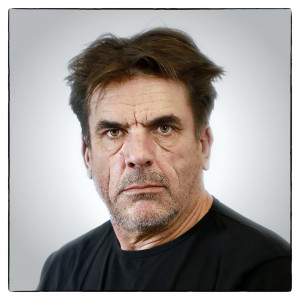
Arne Hodalič
Photo EditorStudied biology in Ljubljana, Slovenia. After finishing university, he worked for five years as a professional sailboat skipper and diver and had his own charter company on the Adriatic coast in Croatia. He began taking photographs, mostly of boats, diving and nautical activities. His first trip to India in 1989 changed the arc of his career. The photos he took in India were published in the prestigious Swiss magazine Animan, and, in response, he received more than 20 assignments from the magazine and travelled around the world with his camera. He joined the Gamma Press Agency in Paris and began working for the French press as a member of several photo agencies. In 2008, he became a lecturer in photography and photojournalism at the Faculty of Social Sciences of the University of Ljubljana and at the Higher School of Applied Sciences in Ljubljana. He is currently the photo editor of National Geographic Magazine (Slovene edition).
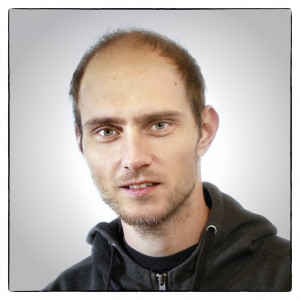
Matej Huš
EditorIs a researcher and mentor at the National Institute of Chemistry, specialising in quantum chemistry, theoretical catalysis, and computational simulations. He is also a contributor covering science and technology for RTV Slovenia, the technology magazine Monitor, and the daily newspaper Delo. He works extensively with students: at the Association for Technical Culture of Slovenia, he helps organise science competitions and coaches high-school pupils for international contests. He reads by day and writes by night. When he's in, he whispers to computers. When he's out, he runs fast and far.
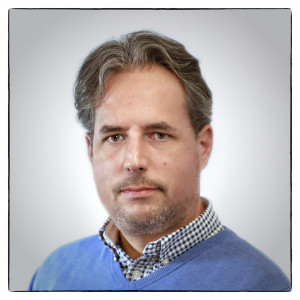
Dejan Jontes
EditorIs a Professor at the Department of Media and Communication Studies at the Faculty of Social Sciences, University of Ljubljana. His research focuses on the critical analysis of journalism and popular culture, television studies, and science communication theory. His articles have appeared in journals including Digital Journalism, Cultural Studies, European Journal of Cultural Studies, Media and Communication, Anthropological Notebooks, Two Homelands, and Comedy Studies. He co-edited the volume The ecosystem of science communication in the post-truth era: perspectives, contexts, dynamics (with M. Achiam and A. Skapin Subanović).
Faris Kočan
EditorHe is a lecturer at Chair of International Relations at the Faculty of Social Sciences, University of Ljubljana. As deputy head of the Center of International Relations, his research focuses on challenges of post-conflict reconstruction and peacebuilding processes in Southeast Europe, with an emphasis on aspects of everyday life and interethnic relations.
Marko Kovač
EditorIs a researcher at the Energy Efficiency Centre at the Jožef Stefan Institute, working on mobility and new technologies. He obtained a PhD in nuclear engineering from the Faculty of Mathematics and Physics, University of Ljubljana, then worked in the automotive industry for several years. Occasionally, he writes books and popular articles on various types of technologies that affect our world, sometimes using unconventional statistics. He finds both Eurovision and the Champions League amusing, despite having no talent for either. He also likes to read and build things out of Lego bricks.
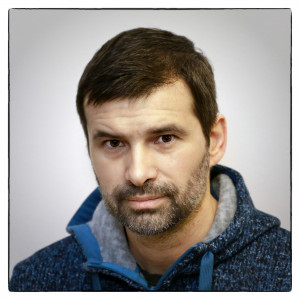
Matjaž Ličer
EditorObtained his PhD in molecular physics from the Faculty of Mathematics and Physics at the University of Ljubljana. He currently works as a physical oceanographer at the Slovenian Environment Agency and at the Marine Biology Station of the National Institute of Biology. He also studied philosophy at the Faculty of Arts at the University of Ljubljana, and obtained a PhD in philosophy from the Graduate School of the Scientific Research Centre at the Slovenian Academy of Sciences and Arts. His translation into Slovenian of Einstein's Relativity – The Special and the General Theory was published as part of the Historia Scientae Collection at ZRC Publishing. He likes sports climbing, freeriding, and film photography.
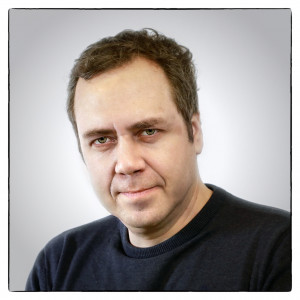
Martin Pogačar
EditorIs a researcher at ZRC SAZU's Institute of Culture and Memory Studies. Lest he forget too much, Martin researches memory in digital media environments, but is also interested in the entanglements of technology, memory, and (post)socialism. He asks questions about the uncertainty of the present predicament in the cultures of the past. Late at night he reads science fiction and is intrigued by space sociology. Recent publications include: "Culture of the Past: Digital Connectivity and Dispotentiated Futures" (in: Digital Memory Studies: Media Pasts in Transition) and Media Archaeologies, Micro-archives and Storytelling: Re-presencing the Past.
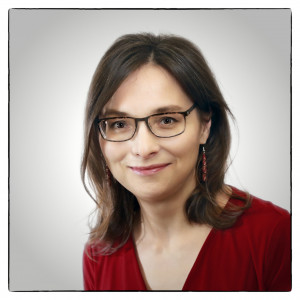
Mija Oter Gorenčič
EditorHolds a PhD in art history and a Master's degree in Slovenian. She is the head of ZRC SAZU's France Stele Institute of Art History and the President of ZRC SAZU's Scientific Board. She also teaches at the Department of Art History of the University of Maribor. She has won several scholarships (Vienna, Bamberg, Paris, Graz), including the 2020 JESH Scholarship (Joint Excellence in Science and Humanities) endowed by the Austrian Academy of Sciences. She also received the award of the Slovenian Art History Society. Her field of research is medieval art, in particular medieval architecture, iconography, monastic art, wall paintings, and the artistic patronage of noble families with a particular focus on the Counts of Cilli.
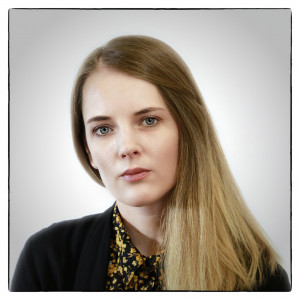
Anja Skapin Subanović
Editor-in-ChiefTo better understand the past, she engages with nostalgia; to better understand the future, she turns to science fiction. As the editor-in-chief of Alternator, she does not pretend to understand all scientific languages, but persistently strives to find a common language for everyone. She travels to less-visited lands and seeks stories that take time to unfold.